

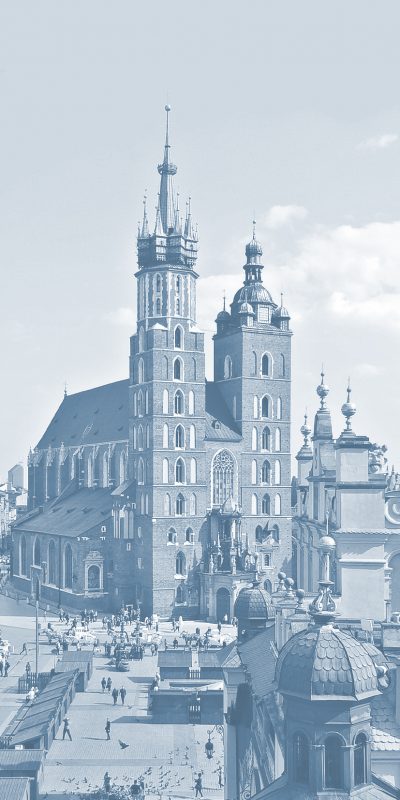
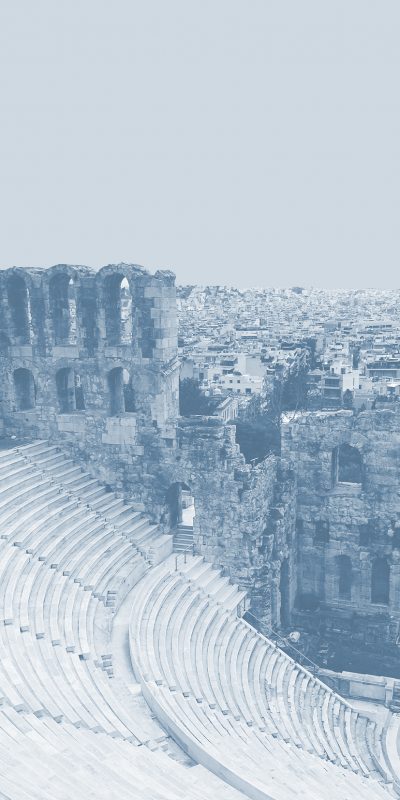


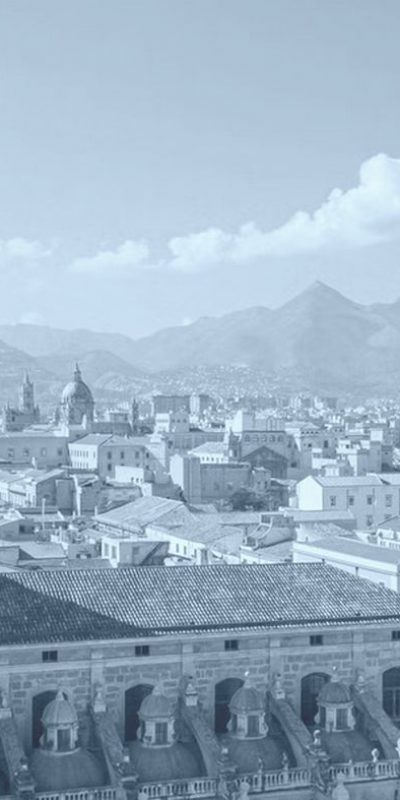
The aim of the project is to improve the teaching process in the area of architecture teaching and to strengthen links between university centres. The starting point for formulating the results of the project was the analysis of social and spatial phenomena that have accompanied the development of mass tourism in historic city centers in recent years. The global nature of the unfavourable phenomena that accompanied the expansion of mass tourism has led to the impoverishment of the functional programme, the MacDonaldisation of space, the deterioration of public spaces and housing in areas of historical value threaten cultural heritage and require intervention. The experience of the pandemic and the temporary total emptying of historically valuable areas in cities, revealed the threats that functional monoculture poses to urban space. Rethinking and redefining the way of using such areas with respect for local cultural identity and in line with the principles of sustainable development is one of the important tasks of the project. The sequence of didactic activities, courses and trainings within the project aims to develop a catalogue of recommendations for spatial interventions that would achieve the above-mentioned objective. The historical centres of Krakow, Florence, Athens and Israel were selected for studies, analyses and study projects. The project will develop and test innovative teaching models involving combinations of forms of teaching using modern technologies useful in distance and hybrid learning. Based on them, a sequence of didactic modules will be built, consisting of pilot course projects, student workshops, webinars, courses and trainings. An important result of the project will be the development of a catalogue of guidelines for sustainable design in areas of historic city centres in the face of new social, economic and technological challenges. The tasks will be carried out in international teams in the mentor-student system and in specialist groups composed of representatives of the staff of cooperating Universities.
Present your content in an attractive Circle layout item 3. You can highlight key information with click or hover effects and style it as per your preference.




The vulnerability of heritage cities has been highlighted by the recent pandemic that has stopped the tourism system towards which most of the historic centers -registered in the UNESCO heritage list- had turned, sometimes becoming almost a monoculture.
Often the public space dedicated to accommodate large flows of tourists was not consistently rethought to accomplish its new function, with the result of unwelcoming spaces and lacking of functions are areas suitable for both residents and travelers’ needs.
With the restrictions imposed by the health prevention systems, travel has stopped, and historic centers have emptied, both in their streets and squares and in their abundant building stock dedicated to hospitality (restaurants, bars, hotels, short-term rentals, etc.) becoming places of abandonment. Therefore, the need for a rethinking of the way of use of these cities is evident, respecting the local cultural identity and the environmental, social and economic sustainability.
With this project we intend to propose alternative urban scenarios, working on a selection of cities inscribed in the UNESCO World Heritage List (Acropolis of Athens – registered in 1987, the Historic Center of Florence – registered in 1982, the Old Town of Krakow – registered in 1978) in two phases: 1. an investigation phase, in which a preliminary analysis is carried out to highlight the vulnerabilities and the cultural peculiarities of the four study contexts and the current ways of using the city with a focus on green spaces, residents’ places and uses and the tourist flows distribution, 2. a proposal phase in which exploratory projects -at the architectural and urban scale – are outlined that offer innovative reflections to hypothesize possible guidelines for intervention.
The selected cities represent a varied selection of medium-sized cities which, however, have different characteristics both from a dimensional point of view of the heritage area, as well as the size of the tourist phenomenon and the management policy of the Site. At the end of the project, each city will have a dedicated dossier that will be made available to local administrations.
Co-funded by the European Union. Views and opinions expressed are however those of the author(s) only and do not necessarily reflect those of the European Union or Fundacja Rozwoju Systemu Edukacji. Neither the European Union nor the granting authority can be held responsible for them.